Claiming Exempt on W-4: Who Qualifies and What It Costs
Claiming exempt on a W-4 stops federal income tax withholding, but only if you owed no tax last year. See the IRS test, the February deadline and the risk.
By the PayCalculatorUSA.com team
Claiming exempt on a W-4 tells your employer to take no federal income tax out of your paycheck. It is allowed only if you had no federal income tax liability last year and expect none this year, and the claim expires every February unless you file a new form.
Most people who write exempt to get a bigger check do not pass that test. The tax does not disappear. It comes due in one payment at filing, sometimes with a penalty on top.
What does claiming exempt on a W-4 mean?
Exempt means zero federal income tax withholding from your pay. Not a lower rate, not a smaller amount. Zero.
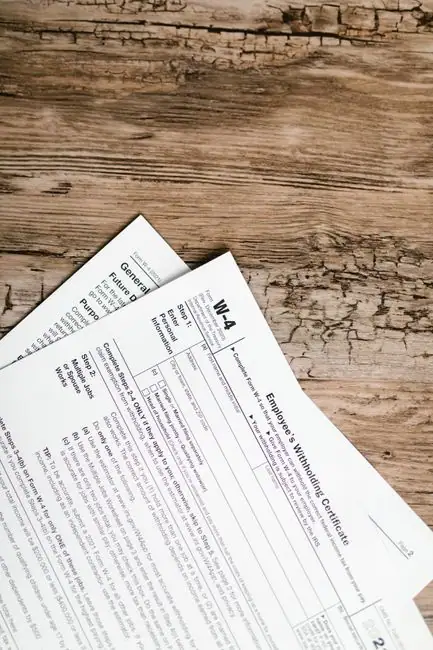
Form W-4 is the only place you make the claim. On the current form it is a line with a checkbox below Step 4(c). On older versions you wrote the word “exempt” in that blank space.
An exemption from withholding is not an exemption from tax. Withholding is only a prepayment of what you owe, so skipping the prepayment does not cancel the bill.
The IRS test: no tax liability last year and none expected this year
Both conditions have to be true:
- Your total federal income tax for last year was zero.
- You expect your total federal income tax for this year to be zero as well.
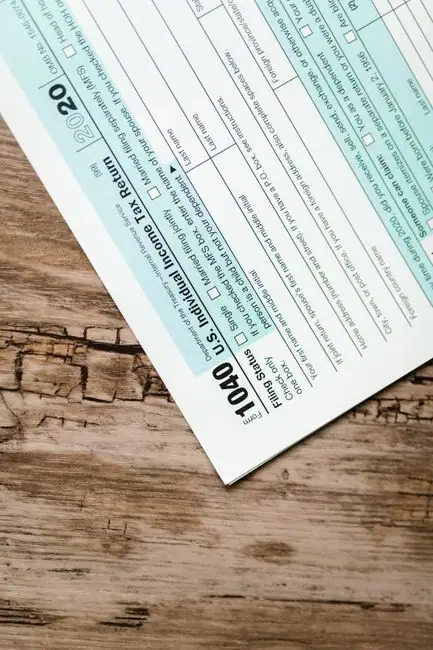
Check the total tax line on last year’s Form 1040. If any amount other than zero sits on that line, you fail the first condition. Getting a refund proves nothing, since most refunds come from withholding more than a real tax bill.
Who usually passes the test
A student with a summer job. Someone whose only income is a few months of part-time work. A worker whose credits wiped out the entire tax bill last year and whose income and family have not changed since.
The standard deduction is the rough line for a worker with only wages. A single filer with wages under $16,100 for the year has no taxable income and no federal income tax. Credits can move that line higher, which the guide on claiming dependents on your W-4 works through.
Who usually fails it
Anyone with a full year of ordinary wages.
Take the standard example used across this site: a single filer earning $60,000 a year in California, paid every two weeks, standard W-4, no pre-tax deductions. Gross pay is $2,307.69 a check, with $193.08 of federal income tax withheld and $176.54 of FICA.
That withholding adds up to $5,020.08 over 26 paychecks, and it lands close to the real tax for the year because the withholding tables are built from the same brackets and standard deduction as the return. A person facing a $5,000 tax bill cannot honestly claim exempt. The California paycheck calculator runs the same split for any salary.
Exempt covers federal income tax, not Social Security or Medicare
Exempt on the W-4 does nothing to FICA. Social Security and Medicare come out of almost every paycheck no matter what the form says.
| Line | Standard W-4 | Exempt |
|---|---|---|
| Gross per check | $2,307.69 | $2,307.69 |
| Federal income tax | $193.08 | $0.00 |
| Social Security | $143.08 | $143.08 |
| Medicare | $33.46 | $33.46 |
| Federal income tax for the year | $5,020.08 | $0.00 |
State tax sits outside this too. States that tax wages use their own certificate, so a federal exempt claim does not stop California withholding.
How to write exempt on Form W-4 correctly
- Fill in Step 1 with your name, address, Social Security number and filing status.
- Leave Steps 2, 3, 4(a) and 4(b) blank. Claiming dependents and claiming exempt at the same time contradict each other.
- Mark the exemption line below Step 4(c), or write “exempt” in that space on an older form.
- Sign and date Step 5. An unsigned W-4 is not valid.
- Give it to your employer, never to the IRS.
The official instructions sit on the IRS page for the form. If you are close to the line, the IRS Tax Withholding Estimator settles it faster than the worksheets. For the ordinary version of the form, read the walkthrough of all five W-4 steps.
Why exempt expires every February and how to renew it
An exemption from withholding lasts one year. A W-4 claiming exempt stops working on February 15 of the following year.
To keep it, give your employer a new W-4 claiming exempt before that date, every single year.
Miss the deadline and your employer falls back to your last valid W-4 that did not claim exempt. If no earlier form exists, they withhold as if you were single with no adjustments, which is the highest normal setting. On the $60,000 example, the $193.08 a check reappears.
What it costs if you claimed exempt and owed tax
You pay the whole year’s federal income tax in one lump at filing, and the IRS can add an underpayment penalty.
That penalty generally applies when your payments for the year come in under 90% of this year’s tax or 100% of last year’s tax. It is figured like interest from each quarterly due date, so twelve months of zero withholding runs up more of it than a late fix in December. IRS Publication 505 lists the safe harbors, including the rule that a balance under $1,000 usually escapes the penalty.
There is a second cost. A W-4 claim with no reasonable basis can draw a $500 penalty. The IRS can also send your employer a lock-in letter that sets your withholding rate, and you cannot change it back without IRS permission.
On the standard example, exempt adds $193.08 to each check for a year and leaves roughly $5,000 due at filing time.
A bigger paycheck without the risk
Step 3 and Step 4(b) lower your withholding legally when they match your real situation: dependents you can claim, the filing status your household actually uses, deductions you expect to take. Step 4(c) moves withholding the other way when you are coming up short.
Before you change anything, check your year-to-date withholding against the tax you expect for the year. That one comparison answers the question exempt is usually trying to answer.
See the numbers before you file the form
Type your pay into the PayCalculatorUSA paycheck calculator and look at the federal income tax line. That dollar figure is what exempt takes out of the withholding column and puts into your check, and it is the same figure you would owe later.

Frequently asked questions
Can I claim exempt for one paycheck?
Not really. A W-4 stays in effect for every paycheck until you replace it, so exempt is not a one time switch. You could file exempt and then hand in a new W-4 the following week, but you still have to pass the no tax liability test to file it at all. Step 4 adjustments are the honest way to change a single check.
Will I get in trouble for claiming exempt when I do not qualify?
You can. The IRS can charge a $500 penalty for a W-4 claim with no reasonable basis, plus an underpayment penalty on the tax you skipped during the year. It can also send your employer a lock-in letter that fixes your withholding rate until the IRS releases it. The unpaid tax itself is still due in full.
How much bigger is my paycheck if I claim exempt?
Bigger by exactly the federal income tax line. On the standard example, a single filer earning $60,000 and paid every two weeks, that is $193.08 a check, or $5,020.08 for the year. FICA does not move at all: $143.08 of Social Security and $33.46 of Medicare still come out of every check.
Does claiming exempt on my federal W-4 stop state withholding?
No. Most states collect income tax with their own withholding certificate, so the federal form has no effect on it. California uses Form DE 4, and exempt status there carries its own test and its own paperwork. In a state with no income tax on wages there is nothing to stop in the first place.